


Evolving a Legacy Sales System into a Scalable Operational System
The plataform is an internal B2B ticket management system designed for high-volume operations, such as batch turnovers, complex promotions, and dynamic pricing.
It emerged as a modernization of a legacy system with over 15 years of history. However, because it was initially treated strictly as a technical update, the original flows were simply transplanted into a new interface, inheriting and, in some cases, amplifying critical usability issues.
The challenge
Years of evolution without structured control resulted in a fragmented, inconsistent experience that was heavily reliant on prior knowledge. Although technically functional, the new system displayed clear usability gaps that directly impacted operations:
-
Operational Overload: Tasks required multiple manual and repetitive steps, increasing execution time and the risk of error.
-
Technical Obscurity: Essential statuses and system information were "hidden" behind overly technical jargon.
-
Steep Learning Curve: The journey was unintuitive, with new operators taking more than 4 weeks to achieve basic autonomy, according to recurring interview data and operational shadowing.
The system didn't fail in capacity; it failed in allowing people to use that capacity efficiently.
My role
I joined the project as the sole Product Designer while it was already underway. During the migration phase, stakeholders noticed significant adoption resistance from operators, who preferred the old system over the new one. In the absence of a dedicated Product Manager (PM), my responsibilities included:
-
Structuring problem investigation and UX diagnostics;
-
Defining technical and functional prioritization alongside stakeholders;
-
Mediating between business needs, technical constraints, and user experience;
-
Defining the product evolution strategy, moving from isolated fixes to a systemic approach.
Before we start 🤚🏽
Some interface elements, operational data and flows were adapted or anonymized to preserve confidentiality while maintaining the integrity of the design process.
Where we began 🪝
The starting point
My work began by solving a specific friction point in the Pricing module:
Operators needed to register ticket types individually, taking about 15 seconds per item. In scenarios with multiple products, this became a productivity bottleneck.
The solution was to prioritize a redesign of the front-end database logic with the engineering team to allow for bulk registration, while maintaining clarity and user control.
The impact was immediate: we reduced the time spent on this step by 85% (from ~15s to 2s per item). In large-scale operations, this represents hours of manual work saved per event, with no increase in errors.

Demonstration of the studies at the time
From Tactical Fix to Systemic Insight 🧭
Defining the Scope & Strategic logic
This tactical win, however, acted as a "canary in the coal mine." It proved that the original project goal - a simple "lift-and-shift" of legacy flows into a modern UI - was insufficient. It revealed that the system’s complexity required more than a visual refresh; it required a structural evolution. This realization triggered a deep-dive Discovery phase to understand the root causes of adoption resistance.
1. DISCOVERY: Mapping the "Invisible System"
The initial modernization had failed to account for Tribal Knowledge. Through qualitative research, I uncovered that the legacy system’s "clunkiness" actually housed high-speed efficiencies that veteran operators relied on. To transform this static legacy into a high-performance tool, I first had to deconstruct the information architecture by:
1. Operational Shadowing: I identified that operators weren't just resistant to change, they were protecting their "muscle memory." The new interface, while cleaner, had fragmented their high-speed workflows.
2. Mental Model Disconnect: Interviews revealed that essential business logic was undocumented and "hidden" behind technical jargon and different pages. Users felt lost in the new version.
3. Audit of Lost Context: I mapped the lifecycle of a ticket to see where the UI was failing to provide status visibility and agility, which was the primary driver for users wanting to return to the legacy tool.
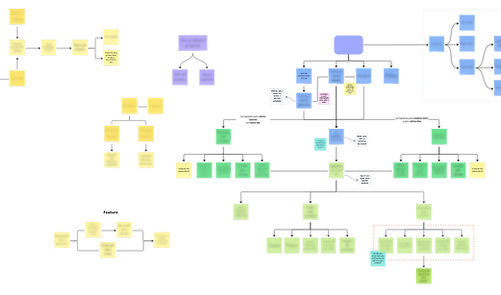
Part of one of many mental maps
2. SYNTHESIS: Defining the Core Challenges
The discovery phase revealed that the system wasn’t just "old"—it was obstructive. To bridge the gap between research and execution, I distilled the findings into three strategic design pillars. During this phase, I applied a Jobs-to-be-Done (JTBD) framework to ensure the system could scale for different Proficiency Levels, creating a foundation for Growth:
Predictive Feedback (Scaling Support): Shifting from "late errors" to a Proactive Validation model. This reduces the failure rate of events and directly lowers the cost of support as the business scales.
Efficiency through Batching (Operational Speed): Moving from individual management to High-Velocity Batch Operations, allowing the same team to manage significantly larger volumes of data.
Semantic Clarity (Lowering the Onboarding Floor): Translating technical jargon into operational language. Using the JTBD approach, I designed simpler paths for Novice Operators while maintaining high-density "Efficiency Layers" for Seniors.
3. THE BLUEPRINT: Setting the Future Standard
With these pillars defined, my first major deliverable was a redesign of the Product Registration module. As the system's most critical and high-traffic flow, it served as the "proof of concept" for this new growth-oriented architecture. This blueprint established:
-
New interaction patterns for high-density, complex B2B data entry.
-
A scalable visual hierarchy that prioritized scannability over aesthetics.
-
Foundational guidelines that ensured every future module would contribute to a cohesive, autonomous user experience.
Unfortunately, this part of the case cannot be shared here due to sensitive information.
Engineering Constraints Shaping the Solution
When presenting this vision to engineering, we identified a roadblock: the front-end architecture could not support a full-scale implementation immediately. Rather than halting production, I transformed the blueprint into a Conceptual North Star and pivoted to an Incremental Improvement Strategy based on a matrix of Flow Criticality x Technical Effort.
Example: STATUS MANAGEMENT
One of the most complex challenges involved managing event statuses. This module perfectly illustrates the transition from a visionary design to a pragmatic, incremental delivery.
The Problem: The system has highly specific business rules, requiring multiple configuration layers. This made it difficult for users to understand what had been completed and what was still required to publish an event.
The Incremental Solution:
-
MVP: We first reintroduced a simplified Status Screen (on very data-heavy existed in the old system) that translated the most critical technical blockers into human-readable, actionable tasks. This immediately reduced the "fatal error" support tickets.
-
Backlog (Future Growth): To keep the development focused, I categorized advanced features, such as a Proactive Notification System and real-time alerts, into a strategic backlog. This allowed us to stabilize the core operation first while keeping a clear roadmap for future enhancements.
The Impact: The Status Screen transformed a "guessing game" into a guided experience. By reviving and refining a concept that had failed in the legacy system, we restored user confidence and allowed even novice operators to resolve issues independently before reaching out to support.

Part of the Legacy Status screen, that was removed

The Concept

The MVP, now clickable
The Solution: Scalable Architecture & Modern UI
Some of the adapted components, designed for user needs, and core concepts
Tables:
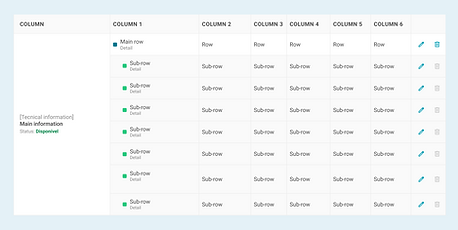

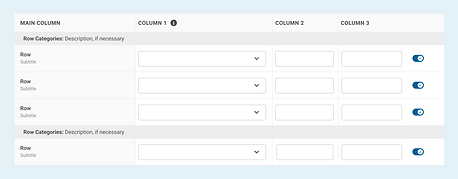
Customization of Angular Material (MD2) components
In high-density B2B platforms, data tables are the primary engine of efficiency. They represent the backbone of how complexity is simplified. If these tables fail to align with user needs or provide clear guidance, the entire system’s usability is fundamentally compromised. In this project, refining table structures wasn't just about UI, it was a strategic necessity to prevent operational friction.
Expansion Panel:
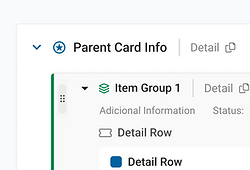
This hierarchical component uses progressive disclosure to organize high-density data within complex B2B workflows. By revealing deep logical layers only when needed, it minimizes cognitive load and prevents operational errors, ensuring a scalable and intuitive experience for managing intricate business rules.

Legacy

Concept
Version 1

MVP
A glimpse in the Concept:

Outcomes
✔️ 100% Migration Success
We overcame the initial resistance, and the system was ultimately adopted by all operators. This was a major achievement, given that the legacy workflow had previously been fragmented across multiple platforms.
✔️ Targeted Operational Efficiency
: In the Pricing module, shifting from individual entries to high-velocity batch processing resulted in an 85% time reduction (from ~15s to 2s per item), saving hours of manual labor during high-stakes event setups.
✔️ Operational Scalability
Engineering reported a noticeable decline in support tickets related to "user error" or "system blockers." The new Status Management screen and proactive data validation allow users to resolve issues independently.
✔️ Strategic Growth
Delivered a comprehensive design blueprint and interaction patterns. This ensures the system can scale to handle more complex event types without a proportional increase in support. The system shifted from a technical burden to a user-centric product, creating a solid foundation for scaling the business to more complex events.
✔️ Drastic Onboarding Optimization
By implementing semantic clarity and predictive feedback, we significantly shortened the learning curve. Operators who previously required over 4 weeks to master basic flows now achieve autonomy in a fraction of that time.
Learnings & Next Steps ✏️